
Mud Tubes on Your Foundation? What Orange County Homeowners Should Know
Subterranean termites can build earthen shelter tubes between soil and wood. A suspected tube merits inspection; appearance alone does not establish current activity.
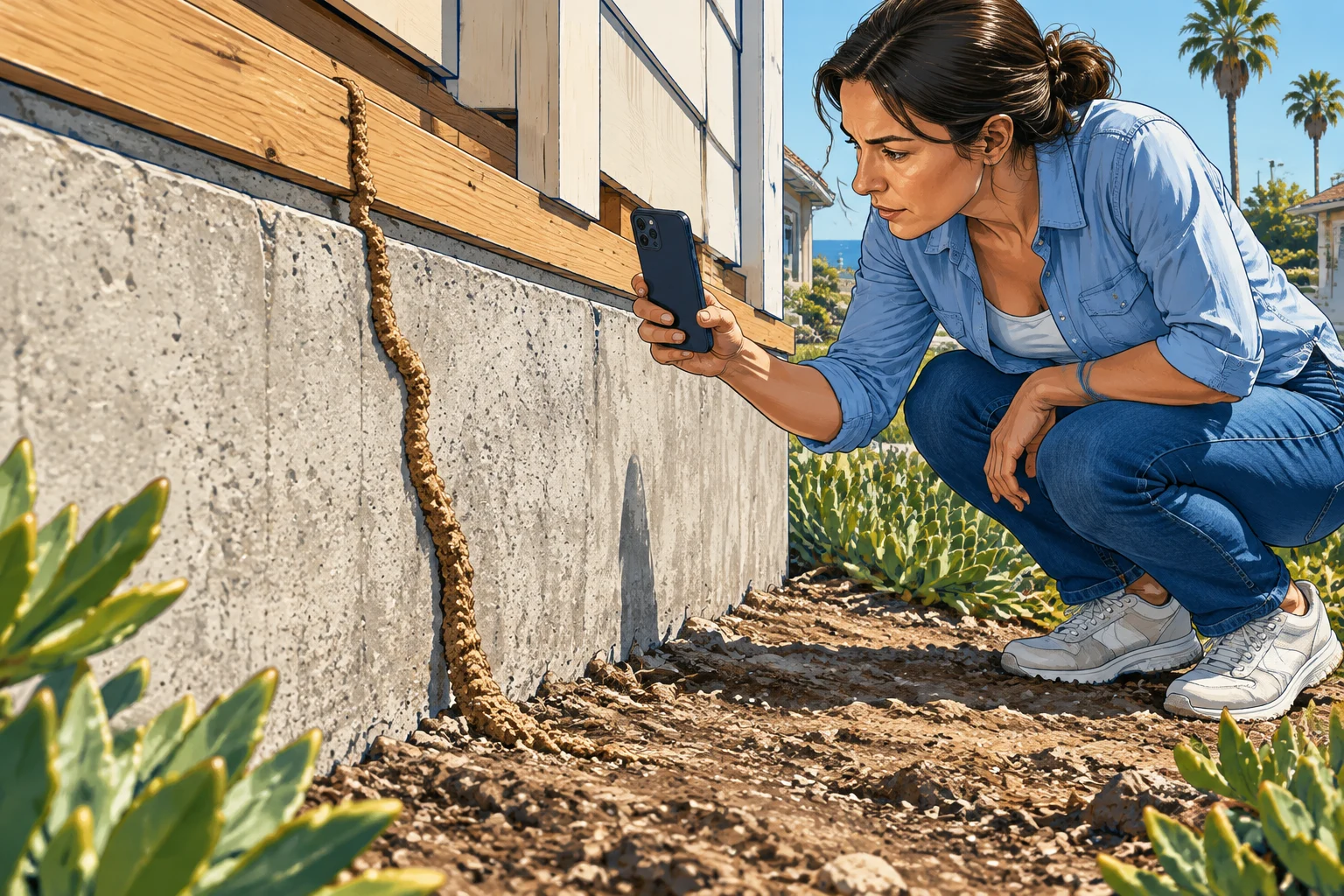
A suspected tube is a reason to inspect, not to guess
Subterranean termites can construct earthen shelter tubes that protect travel between soil and a food source such as wood. A narrow mudlike route on a foundation or accessible framing may be relevant evidence, but a photograph alone may not confirm the maker, current activity or extent of damage.
Do not assume every earthen mark is a termite tube. Soil deposits, other insects and building materials can be confused with it. Preserve the location and appearance for professional evaluation rather than trying to diagnose it by breaking it apart.
Why termites use shelter tubes
Subterranean termites generally nest in soil and can reach structural wood through protected routes. The tubes help maintain a sheltered environment while they travel across exposed surfaces. They are different from the loose fecal pellets associated with drywood termites.
Termite species have different nesting requirements. A suspected tube does not tell you that all termites in the region use the same pathway, and the absence of a visible tube does not establish that a building has no termite activity.
Places evidence may be visible
Accessible foundation faces, soil-to-wood connections, penetrations and framing near ground level can be useful locations to evaluate. Some routes are concealed or obscured by finishes, landscaping or stored items. Only look from areas you can access without crawling into hazardous spaces, moving electrical equipment or dismantling the building.
An Orange County stucco exterior may conceal parts of a foundation transition. That construction detail is a reason to document inspection limits, not a claim that stucco houses are infested. The actual moisture, wood contact and visible evidence matter.
Configurations are not a universal diagnosis
Tubes can follow a surface, branch across it or appear suspended beneath wood. Descriptions such as working, exploratory or suspended tubes are used in pest education, but appearance alone may not establish a tube's function at your property.
The illustration presents example configurations rather than a fixed taxonomy or a record of a Treasure Pest finding. We do not infer colony size, distance to a nest or current termite traffic from the shape shown.
Why removing a tube is not the solution
Scraping off visible material does not identify or address a colony or establish that structural wood is unaffected. It can also remove evidence an inspector could otherwise evaluate. Photograph it, note the location and seek advice before disturbing it.
An empty-looking tube is not enough to conclude there is no current activity. Likewise, an old visible tube is not enough to determine the treatment needed today. Professional assessment considers the evidence, other accessible areas and the limits of the inspection.
What to document now
- Take an overall photograph showing the foundation or framing location.
- Take a closer photograph with a size reference where practical, without touching the suspected tube.
- Note whether you have seen similar material before and whether moisture or construction changed nearby.
- Record accessible soil-to-wood contact or leaks without treating either as proof of infestation.
- Leave concealed spaces and unsafe access to the appropriate professionals.
For loose debris rather than a tube, read termite droppings or sawdust. For a wider range of evidence, the termite signs guide gives context without replacing an inspection.
What an inspection may clarify
A Branch 3 inspection can evaluate accessible suspected termite evidence and conducive conditions, document findings and explain limitations. It cannot turn an inaccessible area into a visible one. Ask what the report covers and discuss transaction-specific requirements if you are buying or selling a home.
Treasure Pest offers a FREE termite inspection request through the existing homeowner and service-area screening. Inspection and any recommended treatment are separate; the request does not automatically confirm an appointment, and we do not offer fumigation through this pathway. Recommendations depend on the findings and approved scope described on the termite page.
Let the evidence guide the next step
Get My Free Termite Inspection. Share what you noticed when the team coordinates the request. Do not apply a general pest product to suspected structural termite evidence as a substitute for assessment.
Your home deserves answers. Not guesses.
Request a FREE termite inspection. Our team will contact you to coordinate the next step.
Sources and Further Reading
- UC IPM: Subterranean and Other Termites, earthen shelter tubes, soil nesting and structural inspection context.
- UC IPM: Drywood Termites, different nesting biology and evidence.