
Termite Droppings or Sawdust? What Orange County Homeowners Should Know
Found a small pile of debris under trim or a window? How drywood termite pellets differ from sawdust, what kickout holes mean, and what pellets can and cannot prove.
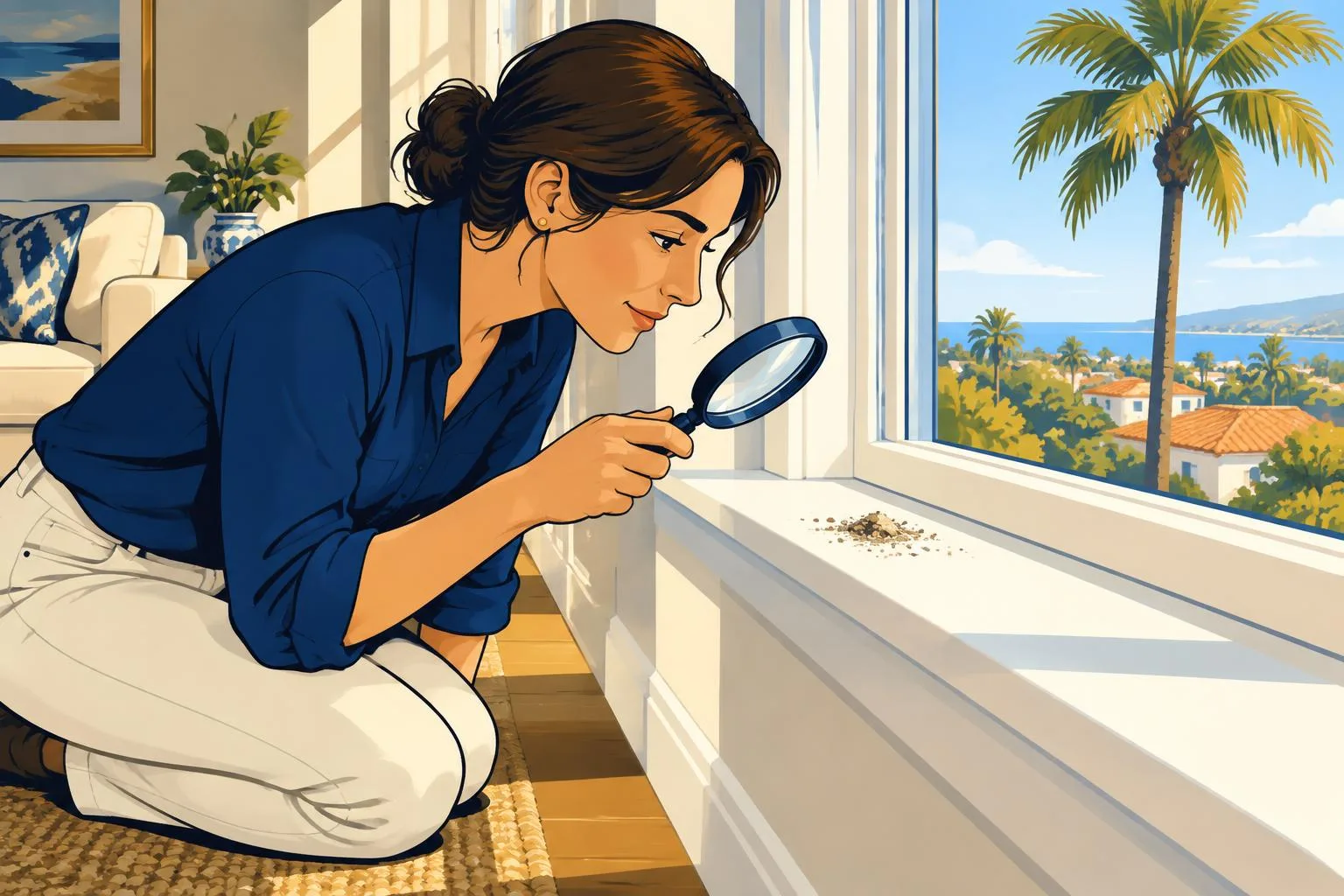
Small, uniform pellets with rounded ends and ridged sides can point to drywood termites. Ordinary sawdust looks stringy and uneven. Pellets alone can't tell you whether termites are still active or how far they've spread, so a professional inspection is the reliable next step.
What drywood termite pellets look like
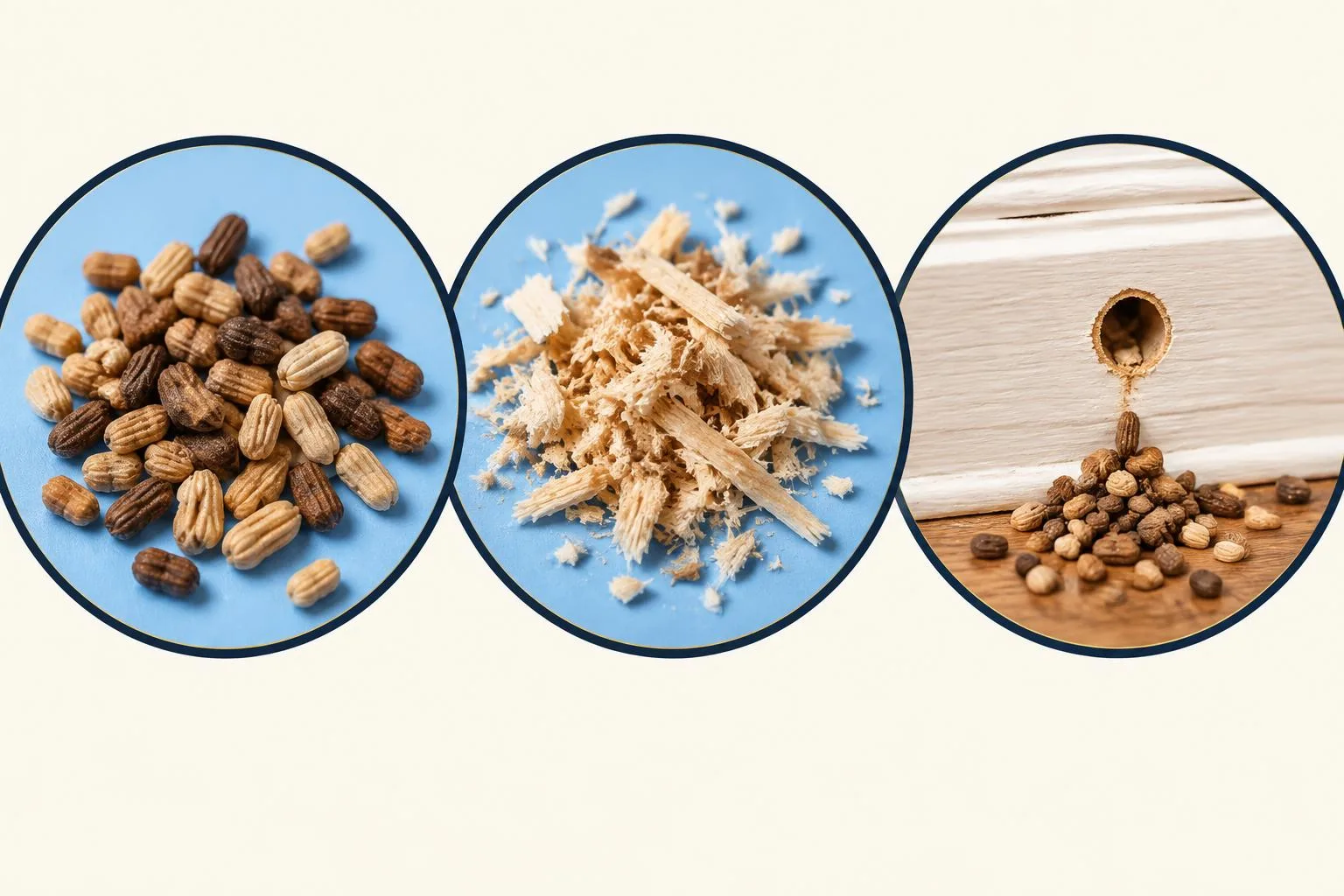
Drywood termites live inside the wood they eat. They push their droppings, called frass or pellets, out through tiny openings. UC IPM describes these pellets as having six sides with clear ridges running along their length. They are tiny, hard and similar in size, and their color can vary from light tan to dark brown.
How pellets differ from sawdust
- Shape: pellets are uniform little ovals. Sawdust is stringy, flaky and uneven.
- Feel: pellets are hard, like coarse sand. Sawdust is soft and fibrous.
- Size: pellets are all about the same size. Sawdust mixes fine dust with larger splinters.
- Location: pellets often collect on sills, baseboards or floors below wood trim, beams or furniture.
Why kickout holes matter
Drywood termites clear pellets through small round openings in the wood's surface, often called kickout holes. UC IPM notes these holes are usually less than 2 mm across. A small mound of pellets right below a tiny hole is a stronger clue than loose debris with no clear source.
Why the pile keeps coming back
UC IPM suggests cleaning up pellets around a kickout hole and checking again a few days later. New pellets can suggest ongoing activity, though building vibration can also shake a few loose. Note the date and take a photo each time. This record helps an inspector.
What pellets can't prove
Old pellets can sit inside walls or furniture for years and fall out later. A pile may come from a past infestation, a piece of used furniture, or wood that was already treated. Pellets are a reason to look closer, not a diagnosis on their own.
Other possible sources of debris
- Carpenter ants push out coarse, shredded wood mixed with insect parts
- Wood-boring beetles can leave fine, powdery dust
- Dampwood termite pellets are football shaped but lack the clear ridges of drywood pellets
- Recent sanding, drilling or settling can leave sawdust
- Dirt, seeds or droppings from other pests can look similar at a glance
What helps an inspector
- Clear photos with a coin for scale
- Where you found the debris and what is directly above it
- When you first noticed it and whether it came back after cleaning
- Any discarded wings near windows or doors
Leave a small sample in place if you can, so the inspector can see it.
Common misconceptions
- "Any sawdust means termites." Most sawdust has an everyday cause.
- "No pellets means no termites." Subterranean termites don't usually leave pellets.
- "A photo can confirm it." Photos help, but an inspection looks at the structure, not just the debris.
What happens during a termite inspection
An inspector checks accessible areas of the home for evidence of termites and conditions that favor them, then explains what was found. Some areas, like the inside of finished walls, can't be seen without opening them. If treatment is recommended, Treasure Pest quotes it separately before any work.
When to request an inspection
Request an inspection if pellets keep reappearing, if you see a pile below a small hole in wood, if you find discarded wings, or if your home hasn't been inspected in years. Treasure Pest offers a FREE termite inspection for Orange County homeowners. Learn more about our termite inspections.
Your home deserves answers. Not guesses.
Request a FREE termite inspection. Our team will contact you to coordinate the next step.
Sources
- UC IPM Pest Notes: Drywood Termites
- UC IPM: Drywood Termites overview
- Treasure Guide: 7 Signs of Termites in Your Orange County Home
Worth remembering
Pellets are a reason to look closer, not a diagnosis.