
Seven Places Mice and Rats May Be Entering Your Home
Mice and rats can squeeze through surprisingly small gaps. The most common entry points are around garage doors, roof vents, utility penetrations, and where rooflines meet.
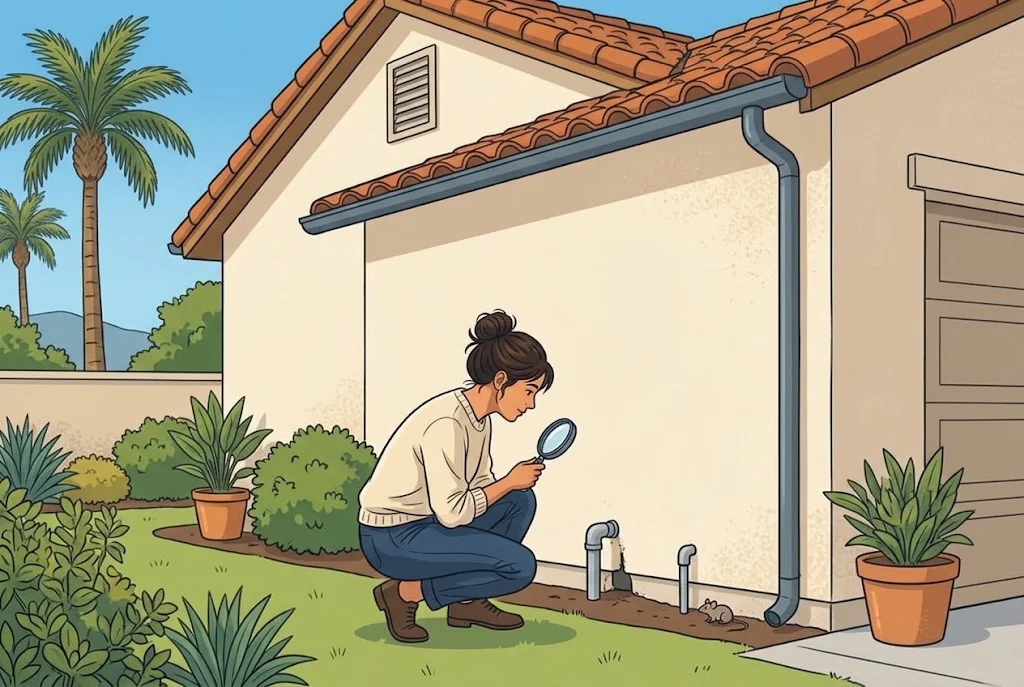
Mice and rats most often get in through worn garage door seals, damaged vent screens, gaps around pipes and wires, roofline openings, crawl-space vents, worn door sweeps and damaged exterior vent covers. UC IPM notes mice can enter openings as small as about 1/4 inch and young rats can squeeze under a 1/2-inch door gap. A gap is a possible entry, not proof of one, so look for signs of use and check from a safe spot.
Potential access point vs. confirmed entry point
Most homes have a few small gaps. That does not mean rodents are using them. A potential access point is an opening large enough to matter. A confirmed entry point shows signs of use: gnaw marks, greasy rub marks along edges, droppings nearby, nesting material or a path worn through debris or plants.
The distinction matters because sealing every gap you can find is expensive and may still miss the one that matters, while sealing a gap rodents are actively using without addressing the rodents already inside can trap them indoors.
1. Garage doors
What it does: the bottom seal and side weather stripping close the gap between the door and the slab or frame.
What matters: a worn, torn or flattened bottom seal, daylight visible at the corners, and gnawed rubber. Uneven slabs can leave a gap on one side only.
Signs of use: chewed seal edges, droppings along the inside wall, stored items with gnaw damage.
Check safely: with the door closed, look from inside for light along the bottom and corners. Photograph anything you find.
2. Roof and attic vents
What it does: vents let attics breathe. Screens keep animals out.
What matters: torn, rusted, bent or missing screens; gaps around vent frames.
Signs of use: rub marks, debris around the vent, scratching or movement sounds in the attic at night.
Check safely: from the ground, with binoculars or a phone zoom. Do not climb onto roofs. Never block vents; attic ventilation matters for moisture and heat. UC IPM describes covering vents with sturdy 1/2-inch metal mesh rather than closing them.
3. Utility penetrations
What it does: pipes, AC lines, cable, gas and electrical lines pass through walls.
What matters: gaps around the line, cracked or missing sealant, open conduit.
Signs of use: gnawing, droppings below, rub marks on stucco.
Check safely: walk the perimeter at ground level and look where lines enter. Do not disturb gas lines or electrical equipment; leave those to qualified trades.
4. Roofline gaps
What it does: where roof sections, fascia and walls meet, and the open ends under some tile roofs.
What matters: open tile ends (bird stops missing), separated fascia, gaps where a roof meets a wall.
Signs of use: roof rats are agile climbers; branches or vines touching the roof can give them a route up.
Check safely: from the ground. Note branches touching the roof. Arrange trimming or roof work with qualified help.
5. Crawl-space vents
What it does: foundation vents ventilate the space under raised floors.
What matters: broken, rusted or pushed-in screens.
Signs of use: burrows or disturbed soil nearby, droppings at the opening.
Check safely: look from outside. Do not crawl into tight spaces, and avoid stirring up droppings or nesting material.
6. Exterior doors and weather stripping
What it does: door sweeps and weather stripping seal side, back and garage-to-house doors.
What matters: worn sweeps, daylight under the door, gnawed corners. UC IPM notes young rats can fit under a door with a 1/2-inch gap.
Signs of use: droppings or gnawing at the door base.
Check safely: look for light under the closed door from inside.
7. Dryer and exhaust vents
What it does: dryer, bathroom and kitchen exhausts push air out of the home.
What matters: missing, broken or stuck-open flaps.
Signs of use: nesting material in the hood, droppings below.
Check safely: look from the ground. Do not cover dryer vents with screen or mesh; lint buildup creates a fire hazard. Never block combustion or appliance exhaust. Ask a qualified professional about a correctly designed vent cover.
How to document what you find
- Photograph each spot with something for scale
- Note signs of use: droppings, gnaw marks, rub marks, sounds and when you hear them
- Do not handle droppings or nests with bare hands. The CDC recommends ventilating, wetting droppings with disinfectant and wearing gloves before cleanup, and never sweeping or vacuuming them dry.
What makes a rodent exclusion plan effective?
Good rodent work usually combines several steps:
- Inspection to find activity and likely entry points
- Reducing entry, sealing confirmed and high-risk openings with suitable materials
- Control of rodents already inside, such as trapping
- Monitoring to confirm activity has stopped
- Follow-up to check repairs and adjust
Sealing without control, or control without sealing, often leaves the problem half solved. For what to do when activity is overhead, see rats in your attic. For weather-related activity, read do rats and mice come inside when it rains.
What should a professional evaluate?
Pest control covers identifying activity, trapping and monitoring, and sealing typical rodent-sized openings. Some issues belong to other trades: roof repairs, damaged fascia, HVAC ducts, dryer vent systems, electrical and gas lines. A good assessment tells you which is which.
Suspect rodents are getting in?
Call (949) 844-3663 to request a rodent assessment. We'll look at the evidence, explain what we find, and quote any work before it starts.
Sources and further reading
Worth remembering
If a dime fits, a mouse might too.