
Do Rats and Mice Come Inside When It Rains? What Orange County Homeowners Should Know
Wet weather can send rodents looking for dry shelter, but rain alone isn't the whole story. What to watch for, where they get in and how to prepare before the next storm.
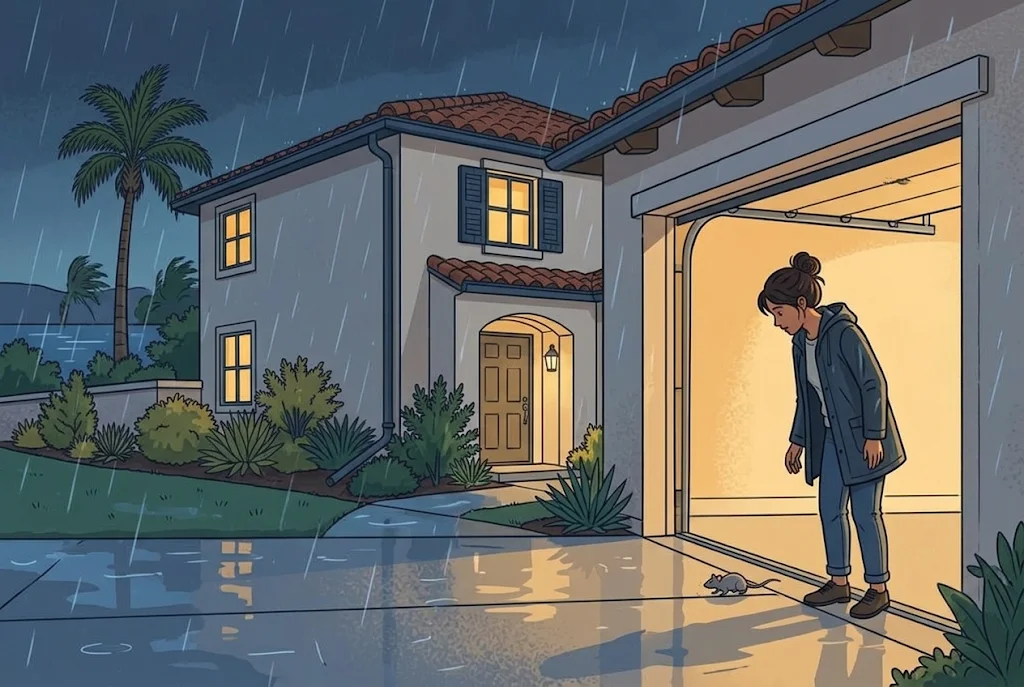
Short answer: Rain and wet weather can change where rodents look for shelter, but a storm alone doesn't mean rats or mice have moved into your home. Whether they get inside depends mostly on available food, nearby shelter and openings in the building. Closing gaps and removing easy food before the rainy season does more than reacting after a storm.
Why rodents may seek shelter during wet weather
Rats and mice need food, water and a dry, protected place to nest. When outdoor nesting spots in dense vegetation, woodpiles or stored items get soaked, some rodents may look for drier cover nearby. A garage, attic, wall void or crawl space can fit that need if there's a way in.
That's a tendency, not a rule. Plenty of storms pass with no rodent activity at all, and some homes see rodents in the middle of a dry summer. Rain is one factor alongside food, shelter and access.
Which rodents we see around Orange County homes
- Roof rats are agile climbers. UC IPM notes they often travel along fences, tree branches and utility lines and may nest in attics, trees and dense vegetation. They're common in many coastal California neighborhoods.
- House mice are small and often nest in walls, cabinets, garages and stored items.
- Norway rats tend to burrow and stay at ground level, around foundations and under debris.
Knowing which one is present changes where an inspection looks and what makes sense next. If you suspect activity overhead, our guide to rats in the attic covers identification and first steps.
How rodents can get into homes
UC IPM notes that house mice can enter through openings as small as 1/4 inch, and that young rats can squeeze under a door with only a 1/2-inch gap. UC IPM recommends sealing openings larger than 1/4 inch to keep out both. Common places to check include:
- Roofline and eave openings, especially where branches or vines touch the roof
- Utility penetrations, where pipes, cables and AC lines enter the wall
- Garage-door gaps and worn or missing door seals
- Damaged vents or screens on roofs, gables and foundations
- Other building openings under decks, around additions or near attic access from the garage
Not every home has openings at these points, and an opening isn't proof that rodents are using it.
Signs to watch for after rain
- Scratching or movement sounds in the attic, walls or ceiling, often at night
- Droppings in the garage, pantry, under sinks or along walls
- Gnaw marks on food packaging, wood, plastic or wiring
- Possible nesting activity, such as shredded paper, insulation or fabric
- Evidence around access points, like dark greasy rub marks or chewed edges near gaps
One sign on its own isn't always conclusive. Birds, squirrels and other animals can make noise too, and old droppings may be left from past activity. A combination of signs, or signs that keep showing up, is more telling.
What homeowners can do before the next storm
- Evaluate exterior openings you can see safely from the ground, such as garage-door seals, vent screens and gaps around pipes.
- Address food attractants: store pet food and bird seed in sealed containers, keep trash lidded and pick up fallen citrus or avocados.
- Reduce accessible shelter: thin dense ivy, move stored items and firewood away from walls and off the ground.
- Manage standing water where appropriate, such as leaking irrigation or containers that collect rain.
- Trim branches back from the roofline.
- Seek professional help when evidence warrants it, especially if you find droppings indoors or hear repeated activity.
Skip climbing into the attic or onto the roof, and don't handle rodents yourself. Don't sweep or vacuum droppings. The CDC recommends ventilating the area, wearing gloves and wetting droppings with disinfectant before wiping them up. Follow the CDC guidance linked below.
What if you already suspect rodents inside?
A good plan starts with figuring out what's actually there:
- Identification and inspection to confirm the animal and how it's getting in
- Monitoring and trapping inside the structure, checked on follow-up visits
- Exclusion work to seal entry points, where it's appropriate and agreed in your quote
- Follow-up to confirm activity has stopped and nothing new has opened up
Exterior bait stations can be part of a plan where they're appropriate and legally permitted, but they aren't a universal fix and they don't close the gaps rodents use.
Treasure Pest offers rodent control in Orange County, including assessment, trapping and monitoring, entry-point sealing and exterior bait stations where appropriate. Rodent work is quoted separately from our general pest service, and we'll explain what's included before any work begins.
Frequently asked questions
Do rats come inside when it rains?
They can, if wet conditions push them toward dry shelter and your home has an opening they can use. Rain alone doesn't mean rodents have come in.
Are roof rats common in Orange County?
Yes. Roof rats are common in many coastal Southern California neighborhoods, and they often reach roofs by climbing trees, fences and utility lines.
Can mice enter through garage-door gaps?
Yes. UC IPM notes house mice can enter through openings as small as 1/4 inch, so worn or missing garage-door seals are worth checking.
Does rain make attic activity worse?
It can make sheltered spaces more appealing, but attic activity depends mostly on whether rodents can reach the attic and find food nearby. Some homes see attic activity in dry months too.
What should I do if I hear scratching after a storm?
Note when and where you hear it, look safely for droppings or gnaw marks without entering the attic, and have it assessed if the sounds keep happening.
Hearing something you shouldn't?
Tell us what you're noticing around your home. We'll help you understand the next step. Call (949) 844-3663; rodent work is quoted before it starts.
Sources and Further Reading
- UC IPM Pest Notes: Rats
- UC IPM Pest Notes: House Mouse
- CDC: Cleaning Up After Rodents
- Treasure Guide: Rats in Your Attic? What Orange County Homeowners Should Do First
Worth remembering
Rain can nudge rodents toward shelter, but sealed gaps and no easy food decide whether they choose your house.