
Rats in Your Attic? What Orange County Homeowners Should Do First
Scratching overhead? How to read the signs safely, where rodents may get in, and how inspection, trapping, sealing and monitoring fit together.

Scratching in the attic may mean rodents, but noise alone doesn't tell you which animal it is. Look for supporting evidence first, keep yourself and your family safe, and have the problem assessed before you choose a control method.
What you might be hearing, and what else to look for
Rats are mostly active at night. Scratching, scurrying or light thumping in the ceiling after dark is a common first clue. Sound is a starting point, not proof. Look for evidence that supports it:
- Droppings near insulation, along walls or in the garage
- Gnaw marks on wood, wiring, boxes or plastic
- Rub marks: dark, greasy smudges along beams and openings
- Nesting material such as shredded insulation, paper or fabric
- Fruit damage on citrus or avocado trees near the house
Roof rats or something else?
Roof rats are common in Orange County. They are agile climbers that often travel along fences, trees and utility lines to reach a roof. But other animals can make noise overhead too, including mice, birds, squirrels and larger wildlife. That is one reason identification matters before anyone recommends a product or plan.
Where rodents may get in
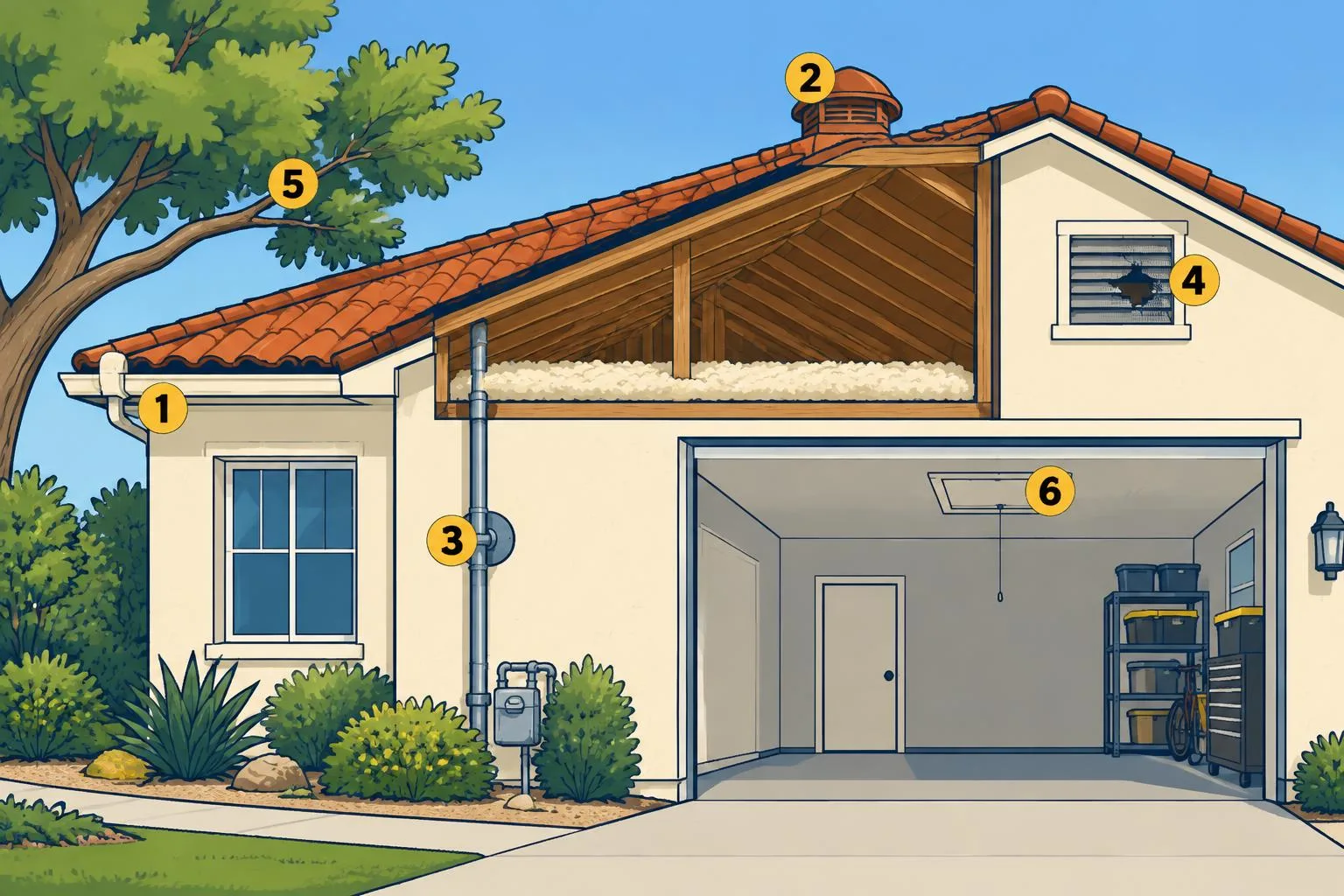
Rats can squeeze through surprisingly small gaps. An inspection usually looks at:
- Gaps where the roof meets the eaves or fascia
- Roof and gable vents, especially torn or loose screens
- Openings around pipes, cables and utility lines
- Branches or vines that touch or overhang the roof
- Gaps around garage doors and attic access from the garage
Not every home has openings at these points. Each property needs its own look.
Conditions that invite rodents
Food, water and shelter keep rodents close. Common examples around Orange County homes include fallen fruit, pet food or bird seed left outside, dense ivy or stored items against the house, and leaking irrigation.
Stay safe while you document
You can help an inspector without putting yourself at risk:
- Note when and where you hear activity
- Take photos from a safe spot, such as the attic hatch, without climbing into the attic
- Do not touch, sweep or vacuum droppings or nesting material
- Do not try to handle a live or dead rodent
Rodent droppings, urine and nests can carry disease. If cleanup is needed, follow the CDC's cleanup guidance linked below.
Why bait alone may not fix the problem
Bait can reduce rodent numbers, but it doesn't close the gap rodents use to get in. If entry points stay open and food stays available, new rodents can move in. California also restricts many rodenticides, so product choice belongs with a licensed professional.
How a professional approach fits together
A thoughtful rodent plan usually combines several steps, chosen for your property:
- Inspection and assessment to confirm what's active and how it's getting in
- Trapping and monitoring inside the structure, checked on follow-up visits
- Sealing entry points, where it's appropriate and agreed in your quote
- Exterior bait stations, where they're appropriate and legally permitted
- Reducing conducive conditions like food, water and shelter
Not every property needs every step. Your technician should explain what fits your home and why.
What a rodent assessment can and cannot tell you
An assessment can show signs of activity, likely entry areas and conditions that attract rodents. It cannot always see inside walls or sealed spaces, and it doesn't replace repairs to roofs, vents or insulation. Treasure Pest quotes any recommended work before it starts.
Questions to ask before you accept a rodent quote
- What evidence did you find, and where?
- Which openings will be sealed, and which won't?
- Where will traps or bait stations go, and why?
- How many follow-up visits are included?
- What can I do between visits to help?
Need help identifying the problem?
Call (949) 844-3663 to request a rodent assessment. We'll look at the evidence, explain what we find, and quote any work before it starts.
Sources
- UC IPM Pest Notes: Rats
- CDC: Cleaning Up After Rodents
- California Department of Pesticide Regulation: Rodenticides
- UC IPM Pest Notes: House Mouse
Worth remembering
Noise is a clue, not a diagnosis. Find the entry, not just the rodent.