
Drywood vs. Subterranean Termites in Orange County
Orange County homes can have two main types of termites. Subterranean termites live in the soil and build mud tubes, while drywood termites live entirely inside wood and leave small pellets.
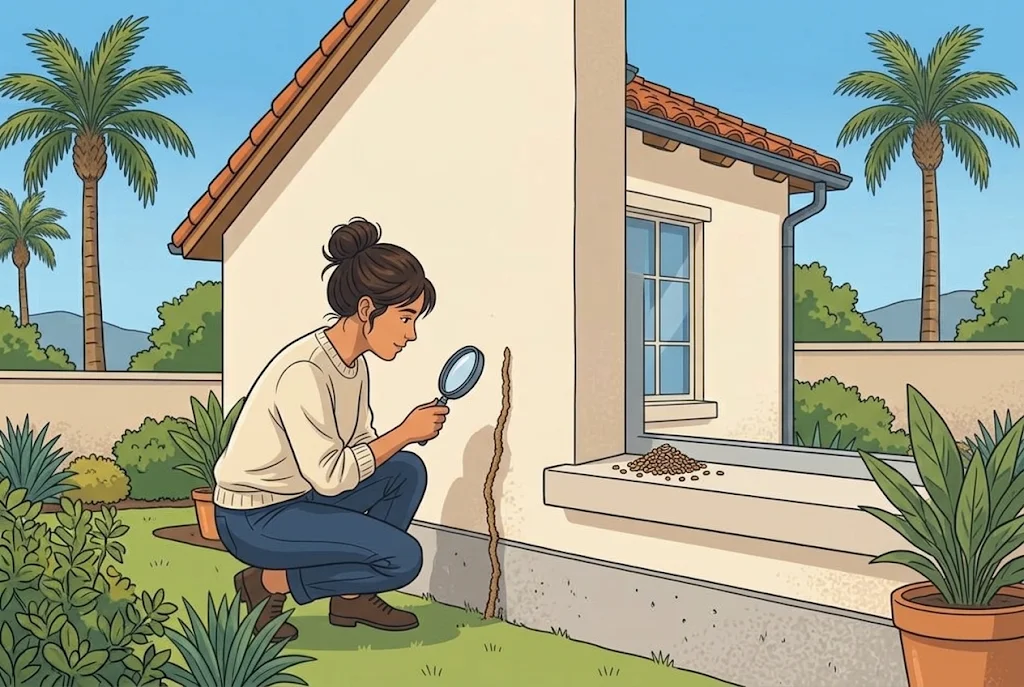
Drywood termites live entirely inside the wood they eat and do not need soil. Subterranean termites nest in or connected to soil moisture and build mud tubes to reach wood. That difference changes the evidence you see, how an inspector looks for them and which treatment options make sense.
Both are common in Southern California, and both can damage a home. But they behave so differently that knowing which one you are dealing with is the first real step toward a plan.
The important difference in plain English
Think of drywood termites as tenants that move into a piece of wood and stay there. A colony can live in a single fascia board, window frame or piece of furniture, with no connection to the ground.
Think of subterranean termites as commuters. Their colony depends on moisture in or near the soil, and workers travel to wood through soil or protected mud tubes, then return.
Where they live
Drywood termites infest dry, sound wood above ground: attic framing, eaves, fascia, window and door frames, wooden trim and furniture. UC IPM notes they can be hard to detect because they live deep inside wood and are seldom seen except when they swarm.
Subterranean termites need consistent moisture. In California, native subterranean termites usually nest in soil and reach wood that touches the ground or travel up foundations through shelter tubes. Other subterranean species can behave differently; UC IPM describes the invasive Formosan subterranean termite as able to form aerial colonies above ground when moisture is available, which is one reason identification matters.
What evidence they leave
Drywood evidence
- Small piles of hard pellets below kickout holes. UC IPM describes the pellets as six-sided with ridges along their length
- Kickout holes less than about 2 mm across in wood surfaces
- Discarded wings near windows and lights after a swarm
- Damaged wood with clean galleries that cross the grain
Subterranean evidence
- Mud tubes on foundations, piers, walls or plumbing
- Galleries in wood that follow the grain and contain soil
- Swarmers or wings, often near windows, doors or the base of walls
- Damage that starts near ground level or near moisture
Our guides on termite droppings vs. sawdust and mud tubes on your foundation cover each sign in detail.
How and when homeowners notice them
Many homeowners first notice termites when winged reproductives swarm. Timing varies with species and weather, so treat these as general patterns:
- Drywood termites: UC IPM notes swarmers commonly appear during daytime hours in summer and fall.
- Native subterranean termites: swarms often happen on warm, sunny afternoons after soaking spring or fall rains.
- Formosan subterranean termites, where present, swarm at dusk and are attracted to lights.
A swarm in the yard does not always mean the house is infested. Swarmers or wings indoors are more meaningful. See flying ants or termites after rain if you are not sure what you saw.
Quick comparison
- Colony location: drywood, inside wood; subterranean, soil or a moisture source
- Needs soil contact: drywood, no; subterranean, usually
- Signature evidence: drywood, ridged pellets and kickout holes; subterranean, mud tubes
- Gallery contents: drywood, mostly clean with pellets; subterranean, soil and debris
- Typical swarm timing in SoCal: drywood, summer and fall; native subterranean, after spring or fall rains
- Where damage often starts: drywood, attics, eaves, trim, furniture; subterranean, near ground level and moisture
Why species identification matters
Identification guides the whole inspection. If the evidence points to drywood termites, the inspector focuses on wood throughout the structure, including attics and trim, and on where pellets are being pushed out. If it points to subterranean termites, attention shifts to soil contact, foundations, slab penetrations, moisture and how termites are getting from ground to wood.
It also shapes the conversation about treatment, because the two types are managed in different ways.
How professional inspections differ
In California, termite inspections for real estate and treatment purposes are regulated by the Structural Pest Control Board. A licensed inspector examines accessible areas and reports what they find, and inaccessible areas are noted as such.
For drywood termites, inspectors look for pellets, kickout holes, wings and feeding damage in accessible wood. For subterranean termites, they look for tubes, damage near the soil line, wood-to-soil contact and moisture conditions. Either way, an inspection describes what was visible on that day; it cannot see inside every wall.
What treatment decisions depend on
Treatment decisions depend on the species, how widespread and accessible the activity is, the construction of the home and the homeowner's goals.
- Drywood termites: UC IPM groups methods into whole-structure and localized treatments. Whole-structure methods such as fumigation aim to reach hidden infestations throughout the building. Localized methods treat specific, accessible infested areas. Each has tradeoffs. Treasure Pest does not perform fumigation; if a whole-structure approach is appropriate, that work is handled by a provider licensed for it.
- Subterranean termites: management typically focuses on the soil and the routes termites use to reach wood, along with correcting moisture and wood-to-soil contact.
The right option for your home should come from an inspection, not from a general article.
What to do next
- Photograph what you found, with something for scale
- Leave pellets, tubes and wings in place where possible
- Note where and when you found them, and any recent rain
- Fix obvious moisture problems and move wood or mulch away from the foundation
- Avoid spraying store-bought products on suspected activity
- Request an inspection
Want to know what you are looking for first? Read five possible signs of termites.
Not sure which termite you're dealing with?
Qualifying Orange County homeowners can request a FREE termite inspection. We'll look at the evidence and explain what we find.
Sources and further reading
- UC IPM Pest Notes: Drywood Termites
- UC IPM Pest Notes: Subterranean and Other Termites
- California Structural Pest Control Board
Worth remembering
Mud tubes point down to the soil. Pellet piles point up to the wood.