
Fleas belong on nobody's guest list.
Dealing with scratching pets and sudden bites around the ankles? Breaking a flea infestation requires targeting both adult fleas and the developing eggs and larvae they leave behind.
Flea and tick services are not included in the recurring plan. Ask the office about a separate quote. Scope and price are confirmed before any work begins.
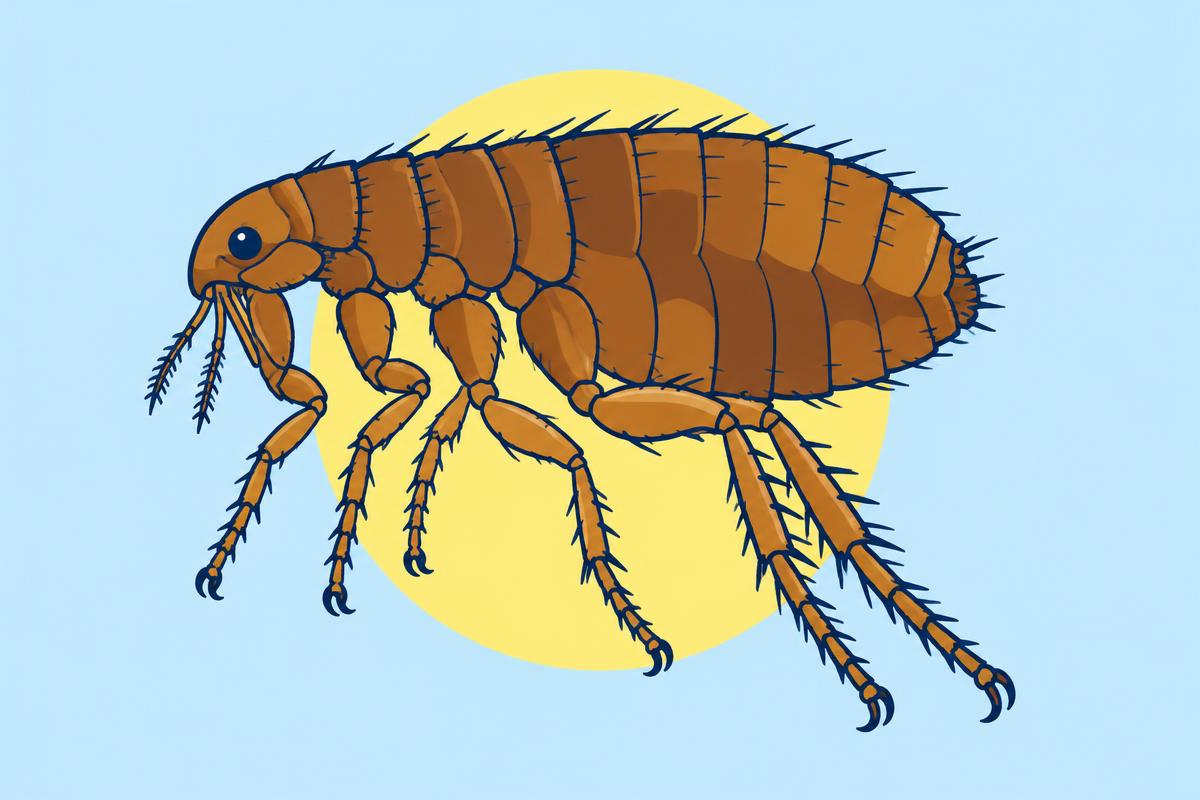
- OC hotspots & entry points
- Carpets and baseboards, pet beds and upholstery, shaded dirt under decks and patio crevices, car interiors and kennels.
- Peak local activity
- Warm months drive outbreaks, but heated homes keep cycles going year-round — especially where pets move between yard and couch.
- The Treasure protocol
- Prep checklist, interior and exterior treatment with growth regulators, then a planned 10–14 day follow-up. Specialty service, custom quoted.
Where fleas congregate
- 01
Carpets, rugs & baseboards
Low-pile fibers where eggs roll off pets and settle deep.
- 02
Upholstered furniture & pet beds
Favorite resting spots with high warmth and organic debris.
- 03
Shaded exterior dirt & patio crevices
Cool, shaded yard spots under trees or decks where pets nap outdoors.
- 04
Car interiors & kennels
Overlooked transport zones where eggs and larvae hitch a ride.
The flea lifecycle: why one spray falls short
Four life stages
Egg, larva, pupa, adult. At any moment, most of the population is still developing out of sight.
The cocoon problem
Flea pupae hide inside protective silk cocoons that withstand standard sprays, emerging 10–14 days later.
Breaking the cycle
Our protocol pairs adult knockdown treatments with insect growth regulators (IGRs) that stop larvae from maturing.
That is why a single treatment rarely finishes the job: new adults keep emerging for days after the first visit, and the plan has to account for them.
Why one visit is never the whole plan.
Most fleas aren't adults yet
At any moment most of the population is eggs, larvae and pupae out of sight. Killing adults alone just clears the stage for the next wave.
The cocoon hides them
Pupae sit inside silk cocoons that shrug off standard treatments and hatch over the next 10–14 days. That's why you may see fleas after the first visit.
Growth regulators plus a follow-up
Insect growth regulators stop larvae from maturing, and a planned 10–14 day follow-up catches newly emerged adults before they lay eggs. Coordinate pet treatment with your vet at the same time.
Less guessing. More getting to the source.
- 1
Homeowner prep checklist
Vacuuming all carpets, washing pet bedding in hot water, and coordinating with your vet for concurrent pet treatment.
- 2
Targeted interior & exterior application
Treating carpets, baseboards, and shaded outdoor resting areas with adulticides and IGRs.
- 3
The 10–14 day follow-up
A planned second visit to treat newly emerged adults before they can lay eggs.
A few things that genuinely help.
Vacuum thoroughly
Go over carpets, rugs, and furniture, then discard the bag or empty the bin outside.
Wash pet bedding hot
Hot water clears eggs and larvae from favorite sleeping spots.
Follow the label
Keep people and pets out of treated areas until completely dry and ventilated per product label instructions.
Let's get rid of the itch.
Call our office at (949) 844-3663 for an honest assessment and custom quote.
Questions we hear a lot.
Why do I still see fleas a few days after treatment?
Do I need to treat my yard too?
Can fleas live in hard floors?
Do I need to treat my pets too?
Are fleas included in the recurring pest plan?
Specialty service scope
Flea and tick services are not included in the recurring plan. Ask the office about a separate quote. A licensed technician confirms scope, and you approve a written quote before any work begins. Treasure Pest does not perform fumigation.