
Thinking About Switching Pest Control Companies? Here's What Matters.
Seven practical questions for Orange County homeowners comparing service quality, treatment decisions and respect for their home. Craft Over Corporate Quotas.

Imagine this: your pest-control visit is over, but ants are still visiting the kitchen, webs linger under the patio cover, and you cannot quite explain what was treated. It is an illustrative situation—not a verdict on any particular provider.
Consider switching when communication, agreed work or the plan's fit repeatedly falls short—not simply because a pest returns. First review your agreement and give your current company a chance to address your concerns. Then compare the quality of the assessment, clarity of the scope and respect for your household.
A good pest-control visit should leave you with more than a treated perimeter. It should leave you with a clearer understanding of your home and the work being done. That is the idea behind Craft Over Corporate Quotas: judge the care, not the size of the company.
1. A diagnosis, not just a spray
An ant trail and a single wandering cockroach are not the same problem. Identification matters because different pests have different habits, sources and management options. Ask what evidence supports the diagnosis before discussing treatment.
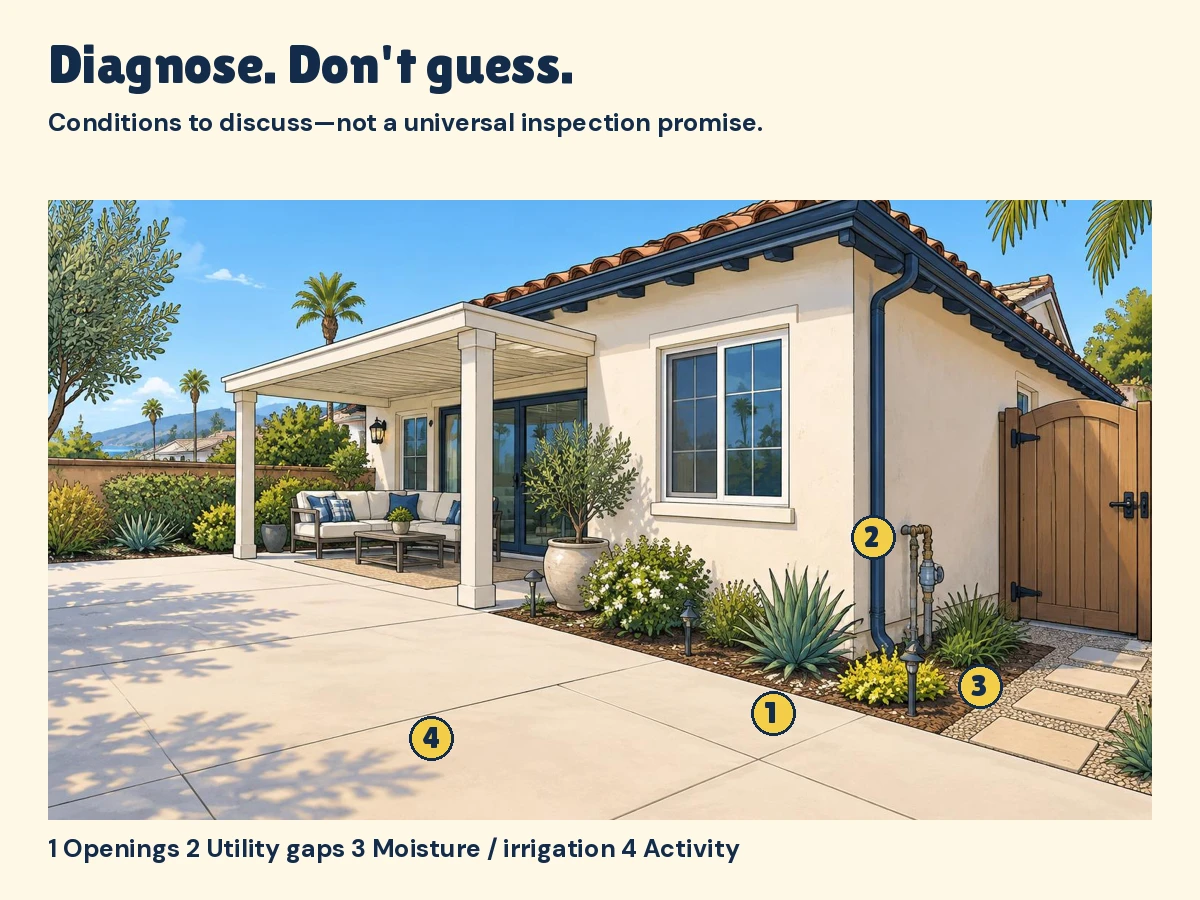
An appropriate assessment may consider activity patterns, foundation openings, utility penetrations, moisture, irrigation, landscaping and accessible exterior entry points. These are possible clues, not a universal inspection checklist. Your property's construction, the pest and safe access determine what is relevant.
In Orange County, an irrigated planting bed beside a stucco wall can pose a different question from a dry patio or a shaded side yard. Observe conditions rather than assuming every coastal or canyon home has the same issue. Photos, where activity occurs and when you see it can help start the conversation.
UC IPM's guidance on hiring a pest-control company encourages homeowners to discuss long-term solutions as well as immediate treatment. Prevention, sanitation and exclusion can be part of that conversation; more spraying is not automatically better service.
Find the reason. Then choose the treatment.
At Treasure Pest, our service philosophy begins with understanding where activity may be coming from and what could be attracting it. That is not a promise to find every hidden source, seal every structural opening or avoid interior treatment in every situation.
2. The details shouldn't be optional
The useful question is not “How long did the technician stay?” It is “Did the work match the agreed scope and the conditions at my home?” A longer visit alone does not demonstrate better pest management.
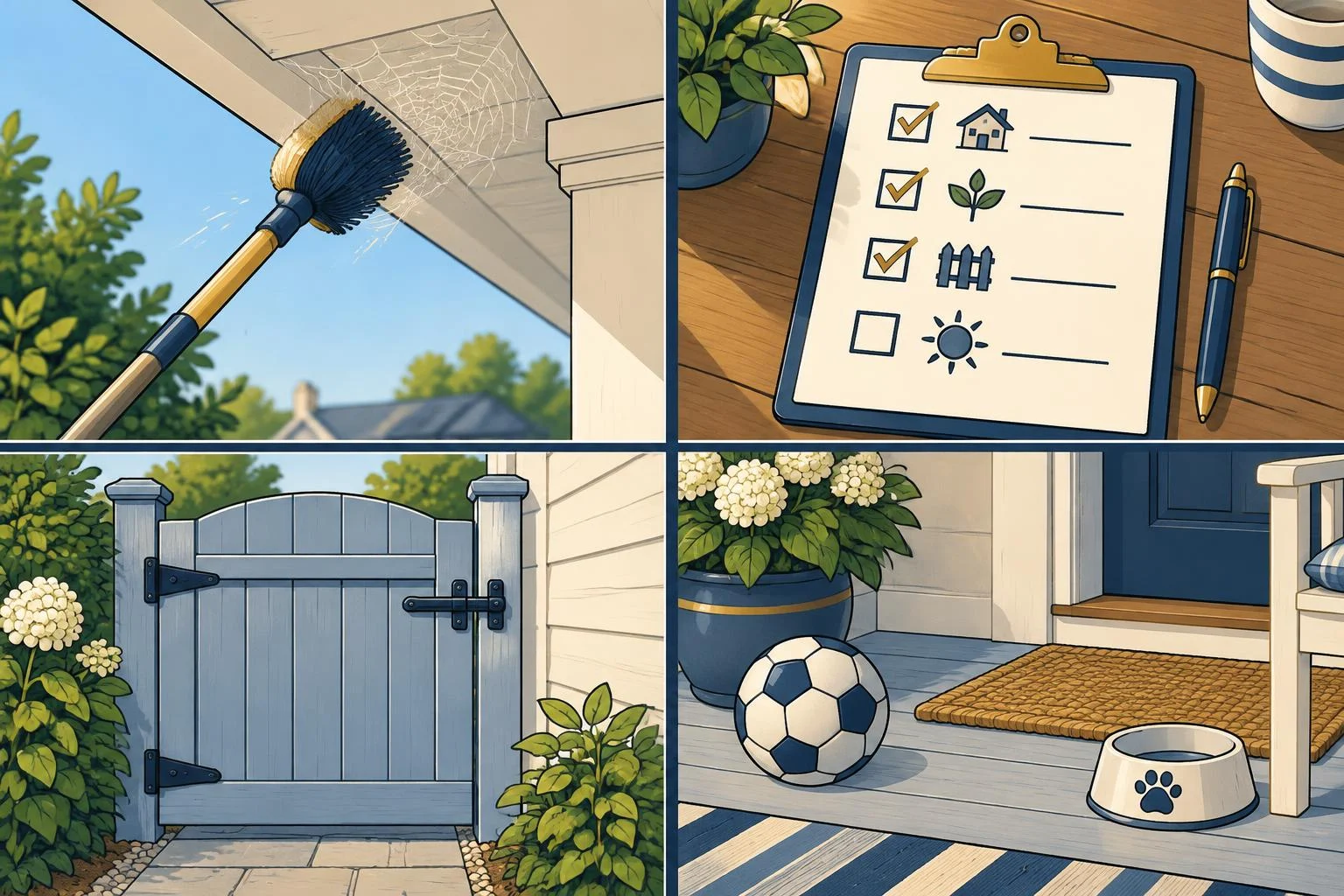
Accessible web removal, appropriate brushing, looking at a patio cover and noticing new activity are tangible topics to discuss. Ask which tasks your plan includes and which exterior structures are excluded. Inaccessible areas, unsafe access and specialty work deserve clear limits—not an assumption that everything is covered.
UC IPM's spider guidance emphasizes removing webs and hiding places and says pesticides are generally unnecessary for spider management. That supports a broader conversation about spider control, rather than treating every web as a reason for more pesticide.
You notice the details. Your service conversation should, too.
If ants keep returning to your kitchen, ask about trails, food and water. If you are seeing cockroaches, ask which kind: an intensive German cockroach program is different from routine coverage for certain outdoor species.
3. Respect for your home should be part of the service
The gate latch matters. So do pets, children's belongings and knowing which areas will be accessed. Tell your provider about household conditions before the visit, and ask what you need to prepare.
A responsible conversation covers arrival arrangements, gates, treatment areas, applicable precautions and what happens afterward. Ask how access is handled and how you will receive service information. Do not assume an arrival text, a gate-security checklist or a particular reporting system is included unless the company confirms it.
Do not rely on a technician to handle pets or move toys, food bowls or personal belongings. Instead, request specific preparation instructions and follow the applicable product label and provider directions. Explain unusual circumstances early so they can be addressed before application.
EPA's Read the Label First guidance explains why label precautions matter, including directions about children and pets. “Natural” does not establish safety. Our environmentally mindful treatment guide discusses prevention and treatment tradeoffs without promising risk-free products or automatic botanical enrollment.
4. You should know what you're paying for
A monthly bill does not necessarily mean a monthly visit. Compare the written service frequency, included pest categories, covered property areas, follow-up conditions and separately quoted work. Ask what would change the price or require a new agreement.
Treasure Pest's published plans and pricing explain the current recurring-plan scope. New plans are month-to-month, with monthly billing and scheduled service every other month. Scope and price are confirmed in writing before work. Specialty work is quoted separately; do not assume rodents, termite inspections or intensive programs belong to general recurring coverage.
Read the service terms and cancellation information before agreeing. Your accepted agreement matters, and an educational article does not amend it. When comparing providers, request written clarification of initial charges, renewal dates and any cancellation requirements rather than relying on a sales phrase such as “all included.”
5. Local accountability can make a difference
Some homeowners prefer knowing who owns the business and where to direct a question. Local familiarity can help make conversations about a home's conditions more specific. It does not mean a locally owned company is automatically better—or that a national company's technician cannot deliver excellent care.
Treasure Pest was founded by Brandon and Carson Matthews. We are a family-owned Orange County company, building our reputation one front door at a time. Meet the company and check our published service areas rather than assuming all Orange County addresses are eligible.
For any provider, look for clear ownership, understandable agreements and a willingness to explain decisions. EPA's company-selection guidance also recommends checking licensing and asking about the proposed treatment, alternatives and precautions. Friendly branding is an introduction, not a substitute for those answers.
6. Seven questions to ask before switching pest control providers
Take these questions to your current provider or any company you are considering. The best answer is specific enough to compare with the written agreement—not simply “we take care of everything.”
- 1
How do you identify the pest problem before selecting treatment?
Ask what evidence guides identification and which property conditions matter. A useful answer connects the pest to the treatment rather than starting with a product name.
- 2
What does a normal service visit include?
Request a clear scope: accessible areas, agreed tasks and exclusions. Ask how new activity changes the plan and what cannot be reached safely.
- 3
Which pests are covered by the recurring plan?
Compare named pest categories, not a broad promise of pest control. Ask which species or intensive programs need a separate assessment and quote.
- 4
How do you handle problems between scheduled visits?
Ask when to contact the company, what information to provide, and which follow-up conditions apply. Do not assume every return visit is automatically included.
- 5
How will I know what was applied?
Ask what product information, application details and service documentation you will receive, and how to get an explanation if something is unclear.
- 6
What precautions or preparation should my household follow?
Mention children, pets, access and belongings. Request the applicable preparation and label-based instructions before treatment; natural does not mean risk-free.
- 7
What are the billing, cancellation, and service terms?
Read the agreement for initial charges, billing dates, visit frequency and cancellation rules. Resolve differences between a sales conversation and the written scope before agreeing.
So, is it time to switch?
It may be worth comparing alternatives if communication repeatedly falls short, the scope stays unclear, reasonable questions go unanswered or promised work is not performed. A plan that no longer fits your property's needs can also be a sensible reason to reconsider.
Pests can recur even with appropriate professional service. New activity alone does not prove poor workmanship. Describe the problem, review what was agreed and discuss follow-up with your current provider first. Before changing companies, understand cancellation dates and avoid accidentally arranging overlapping services or conflicting treatments.
Treasure Pest is a thoughtful alternative to consider—not a claim that every other company is getting it wrong. Our philosophy is straightforward: understand the problem, explain the proposed work, respect the property and take pride in the details. Playful personality. Serious about service.
Ready for pest control that pays attention?
Tell us what's happening around your home. We'll help you understand the next step.