What Pet Owners Should Ask Before a Pest Control Visit
Before any pest control visit, pet owners should ask what products will be used, where, and any instructions for pets during and after service. A good provider will welcome the questions.
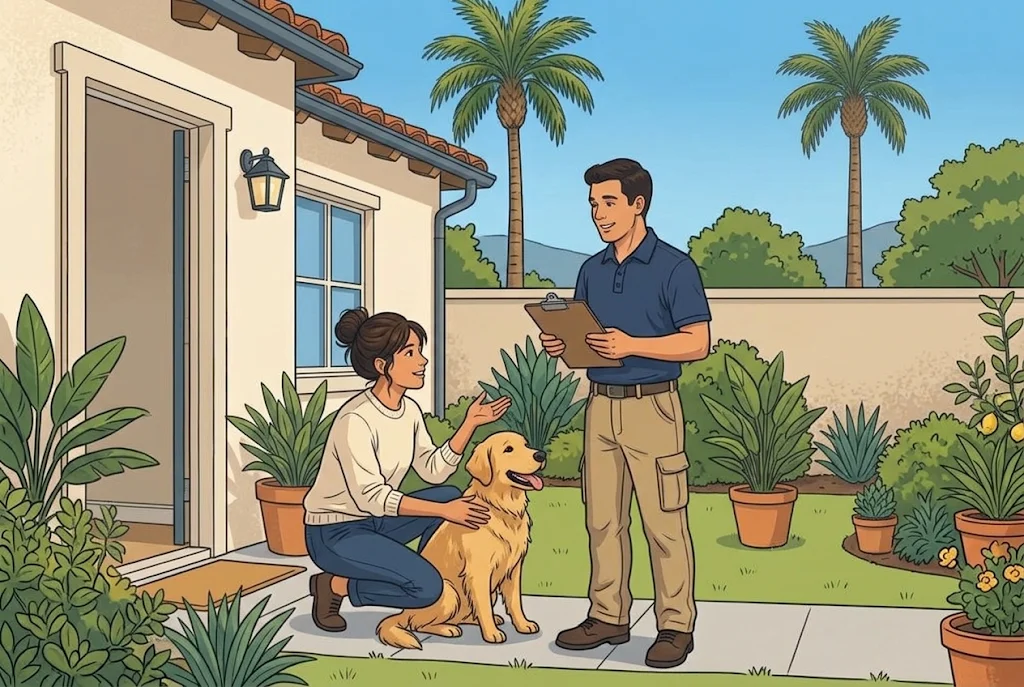
Tell your provider about every animal in the home, ask what will be treated and where, and follow the product label and the technician's site-specific instructions for keeping pets away and letting them back in. There is no single reentry time that fits every product or home. If a pet may have been exposed, call your veterinarian or an animal poison control line right away.
Pets are family. Asking questions before someone treats your home is not being difficult; it is exactly what a good provider expects.
What to tell your provider before the visit
The more your provider knows, the better they can plan where and how to work. Mention:
- Every animal, including cats, dogs, birds, rabbits, reptiles, fish and backyard chickens
- Aquariums and terrariums, and where their air pumps draw air from
- Bird cages, since birds can be sensitive to airborne materials
- Outdoor enclosures, hutches and coops
- Food and water bowls, beds, litter boxes and toys, and where they usually live
- Where pets spend time outside, such as dog runs, lawn areas and favorite digging spots
- Pets with health issues, pregnancy, young animals or anything your vet has flagged
- Anything your pet tends to chew, lick or dig up
Questions worth asking, and why the answers matter
What pest are we treating? The pest decides the plan. A provider who has identified the pest can explain why a particular method fits.
Which areas will be treated, and which will not? Knowing whether work is limited to the exterior, cracks and crevices, or specific rooms tells you where pets need to stay away.
What products will be used? Can I see the label or documentation? You are entitled to know what is being applied. Product labels include directions and precautions, and a Safety Data Sheet may be available. Writing down product names makes it easier for your vet or poison control to help if something goes wrong.
How should I prepare my pets? Ask whether pets should be indoors, outdoors, crated or away from home, and for how long.
When can pets go back into treated areas? The answer should come from the product label and the conditions on the day, such as whether a surface needs to dry. Be wary of a one-size-fits-all answer.
Are there site-specific precautions? For example, covering an aquarium, turning off its air pump, or keeping a dog off a treated lawn area.
What happens next? Ask about follow-up visits, what activity to expect afterward and how to reach the company with questions.
Preparing your home
- Pick up food and water bowls, toys and bedding from areas to be serviced
- Store pet food in sealed containers
- Decide where pets will be during the visit, ideally a room or space away from the work
- Cover aquariums and ask whether air pumps should be turned off during and after interior work
- Move bird cages to a room that will not be treated
- Clean up pet waste in the yard so technicians can access the perimeter
- Make sure gates can be opened and closed securely
During the service
Keep pets secured and away from the technician and the work area, even friendly pets. A curious nose in a freshly treated crack or a dog slipping through an open gate are the kinds of avoidable problems good preparation prevents. Let the technician know if plans change, such as a pet that cannot be moved.
After treatment
Follow the instructions you were given, which should reflect the product label and how the treatment was applied. That may mean waiting until treated surfaces are dry, keeping pets off certain lawn or garden areas, or ventilating a room. Return bowls, beds and toys only once those areas are cleared. Watch pets for unusual behavior over the next day and keep the product names handy.
If a pet may have been exposed
Act quickly and do not wait for symptoms to get worse.
- Call your veterinarian or the nearest emergency animal hospital
- ASPCA Animal Poison Control Center: (888) 426-4435, available 24/7; a consultation fee may apply
- Pet Poison Helpline: (855) 764-7661, available 24/7; a fee may apply
- National Pesticide Information Center: 1-800-858-7378, for general pesticide questions (not emergency treatment)
Have the product name or label available and note what happened, when and roughly how much contact your pet had. Do not try to make your pet vomit unless a veterinarian tells you to.
Pet Owner's Pest Control Visit Checklist
Before
- Tell the provider about every animal and habitat
- Ask what pest, where, which products and reentry guidance
- Pick up bowls, beds, toys; cover aquariums; move birds
During
- Keep pets secured away from work areas
- Keep gates closed
- Mention any change of plans to the technician
After
- Follow label-based reentry instructions
- Return pet items once areas are cleared
- Watch for unusual behavior; keep product names handy
Prefer a prevention-first approach? Read green pest control vs. traditional treatments for questions about lower-impact options.
Questions about pest control around your pets? Let's talk.
We talk through pets, kids and how you use your space before we get to work.
Sources and further reading
- ASPCA Animal Poison Control
- Pet Poison Helpline
- National Pesticide Information Center: Pets and Pesticides
- California Department of Pesticide Regulation
Worth remembering
A good pest control company is happy to answer every question about your pets.